
In the last Old Africa, Karen Rothmyer talked of the 1923 rebellion in ‘When Kenya’s White Settlers Threatened UDI’, so I thought I would provide further details about it. Winston Churchill had proposed a common electoral role, one Indian member on the Executive Council, the highlands to be reserved for Europeans, no segregation of any sort, and adequate municipal representation for the Indians. Robert Coryndon, Kenya’s Governor, wrote to the Secretary of State to say that Churchill’s settlement, if enforced, would lead to extensive hostile demonstrations, boycotts, probable destruction of bazaars and at worst the shooting of a few Indians in the district centres. In fact, things were far more serious.
The colony was aroused by alarming headlines in the press and a tour of the entire country was undertaken by Powys Cobb, a member of the Legislative Council, and Brigadier-General Philip Wheatley. In every part of the country meetings were called and resolutions passed which the government could not fail to consider. The meetings were very well attended; there were 250 people at Eldoret and 350 at Nakuru. At Eldoret the meeting pledged resistance with every means in their power, including armed resistance. The Uasin Gishu Advertiser had a whole page with nothing on it save ‘Johnny Get Your Gun’. A form was distributed everywhere on which settlers stated the number and types of guns and ammunition they had and what means of transport was available to them. They were also asked if they had qualifications as engineers, mechanics etc. After the information was collated, the settlers were organized into a striking force, with its own general staff under the command of Wheatley. The country was divided into 27 mustering districts under 7 group leaders who reported to Wheatley, the Commander-in-Chief. All districts were formed into battle sections and were told what rations, kit etc would be required for an advance on Nairobi where, after taking all the administrative posts on the way, it was proposed to seize the Governor. Part of the railway line between Mombasa and Nairobi was to be ripped up, and it was planned to make it as difficult as possible to get water on the 330-mile journey from Mpmbasa to Nairobi. Women and children were to be concentrated in various townships where the older men would protect them.
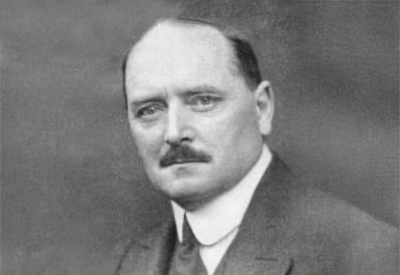
General Philip Wheatley, the leader of the rebellion, was a fiery former Indian army officer with a soldier-settler farm at Nanyuki. He was dangerously indiscreet, as was his colleague J.E. Coney at Kitale who said hostilities would begin in a fortnight, giving a ‘wild and harmful distortion of the facts’. Word of the potential rebellion reached the ears of Governor Coryndon. In a message to Churchill he said ‘I believe I shall be able to handle the settlers largely by laughing at them a little and by getting them to use a sense of proportion in their outlook.’ However, he was soon to learn that he would have to abandon his amused tolerance as something very serious was afoot. He received copies of the various resolutions passed at the settlers’ meetings. He decided against arresting the persons defying the constituted authority because no jury would convict them, and deportation of such numbers of people was impossible. A declaration of martial law would have been injudicious, so he instructed the Commissioner of Police to warn the public press against publishing resolutions containing references to the armed forces.
Could Coryndon rely on his own troops? The officer commanding the troops informed the government that he could not rely on his own men to obey their officers in the case of disturbance, since many of their old officers were settlers and, as for the reservists, most of them were employed on farms of ex- officers. The rebels had made an an arrangement with the military that they would be taken by a surprise in their mess. As for the Provincial and District Commissioners, only 20% of them had views in opposition to those of the settlers and 80% said they would find pressing duties in a portion of their district far removed from the disturbances if they occurred. Coryndon arranged that all ammunition dumps were to be transported to Mombasa and put in the sea. He considered the transfer to Mombasa of all machine guns and rifles. He cancelled the sitting of the Legislative Council indefinitely, and he telegraphed the Secretary of State that the first action to be taken may be the refusal to pay taxes and a commercial boycott against the Indians but this may be followed by the seizure of the armoury, Treasury, Customs, Railway and Telegraph offices with the object of paralysing the government. He questioned if it was possible to call out British native troops against Europeans in their own colony and said that if they were compelled to do so it is probable that they would refuse.
Coryndon was severely worried, telling London that ‘it will not be forgotten that the colony contains a very large proportion of trained soldiers, many of high military capacity. The transport and intelligent divisions in their organization are almost exactly those which took part in the German East African campaign.’ He then arranged talks with Philip Wheatley who told him that his forces could take over the government and run the railway. They would take over the cable station, offices, wireless, stock of petrol, repair shops and all military equipment. They knew about the arms and ammunition in possession of the military and they expected no trouble from the King’s African Rifles. They had plenty of arms and ammunition.
Wheatley was told by a government official that they had got him as a marked man, and the intelligence department scrutinised his mail – ‘I couldn’t even order a dozen of whisky without the latter being considerably delayed, or even suppressed altogether, by some B.F. who in his muddled mind conceived that an order to enable me to alleviate my thirst conveyed some cryptic information which might possibly be subversive of law and order.’
The Secretary of State summoned Coryndon and some European representatives to London to discuss the situation. After four months and perhaps aided by a telegram for ‘assistance’ from the officer commanding Kenya troops, a compromise was worked out and the rebellion died away. Essentially the settlers had got part of what they wanted, winning on some points of substance. It seemed they would indeed have carried out the threat of military action had the matter not been resolved satisfactorily. As a warning that further dissent would be quashed, HMS Colombo and HMS Cairo were sent to Mombasa.
Recent Comments