
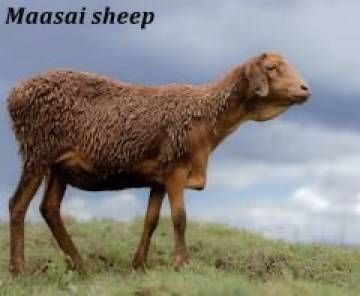
By 1912 the land which later became Kenya had proved, despite early disasters, to be favourable for the raising of western style sheep. The Africans had farmed sheep for hundreds of years, but the animals they raised were small and lacking in wool. The sheep herded by the Maasai were covered in red-brown hair (not wool) and used mainly for meat. Hardy and resistant to parasites, they could thrive in arid conditions. In 1903 Lord Delamere bought land at Njoro and wrote from Africa to his agent at Vale Royal, his English estate, ‘I want you to get me the following: 6 Ryeland rams, 1 Ryeland ram of best class, 10 Ryeland ewes, 2 Lincoln rams, 2 Border Leicester rams, and 2 Romney Marsh rams. I want them as good as possible for the money in both meat and wool, and it is particularly important that they should come from good flocks and not be flukes. The rams, with the exception of the better class Ryelands, will be put to native ewes to see how they do before getting out ewes or better class rams. I am buying a large flock of native ewes for crossbred sheep and hope before long to have purebred ewes, but wish to try the breeds first. New Zealanders here already say the country is as well suited for purebred English sheep as New Zealand, and with cheap land at a rent of 1 penny an acre it should be good business. I also want you to engage a shepherd. He must not be an uneducated bumpkin as things differ greatly in a new country and new things have to be learned. Next door to me the East Africa Syndicate have a large sheep run and have got a New Zealander for manager. English and New Zealander together ought to arrive at a solution of any difficulty that crops up. A man cannot learn sheep unless he has been accustomed to them all his life.’
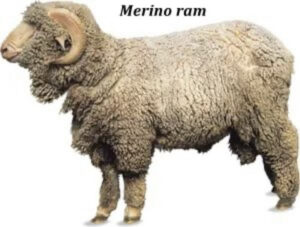
 So there arrived at Njoro train station in 1903 Sammy McCall, a Scots shepherd in a thick tweed suit and bowler hat, and the required sheep. Delamere immediately sent McCall to New Zealand to buy merino sheep. He arrived back in 1904 with a shipload of 500 merino ewes. Almost immediately there were problems – the Ryelands and Border Leicesters developed lung disease, and worms in their millions attacked the sheep. The pastures were too rich and damp for the merinos which started dying. They also had foot rot and other complaints. The 6,000 native ewes owned by Delamere did little better. Njoro was clearly not the place for sheep. Delamere relied heavily for advice from the Maasai whose language he spoke and whom he said were the only people who really understood sheep. They said they never raised sheep round Njoro way. Delamere and Sammy McCall therefore moved to Soysambu, an estate on the floor of the Rift Valley. There McCall lived in a little mud hut and began breeding up high-grade merino flocks, with new rams coming from Australia every year. A hundred Maasai, provided by Delamere with umbrellas to shade them from the hot sun, were employed as herders.
The Maasai sheep, hardly distinguishable from goats, were cross bred with the imported sheep. The offspring were cross-bred again with imported rams and the resulting sheep were very merino-like. You could hardly distinguish the third generation from pure-bred merinos. In 1907 a small flock of Corriedale ewes came to Soysambu from New Zealand, and in 1908 300 pure-bred merino ewes arrived. These all did well at Soysambu. Whereas at Njoro only 6 lambs had survived from 4,000 ewes, at Soysambu 90 percent of lambs survived. The first examples of cross-bred merino wool were sent to England in 1908, and were received favourably. The next year a few bales of wool sold well. Delamere stared to export commercial quantities of wool.
 It was not all trouble-free. In 1911 the disease the Africans called ‘ngurutu’ spread, killing the lambs. Not until 1917 was the cause discovered – a brown tick which also caused East Coast fever in cattle. Then there was blue-tongue, and worms infesting lungs and intestines. The sheep had to be corralled in secure bomas at night to protect them from lions, leopards, hyenas and hunting dogs. Delamere fenced his whole estate, but this did not deter hordes of zebras. McCall found these problems, and particularly the huge increase in the number of sheep, too difficult to handle. Delamere paid him off generously, with enough money to buy his own farm.
Delamere had another idea. In those days mutton, rather than lamb, was the meat of choice. In 1910 Delamere stared Nyama Ltd. and imported a cold store. He set up butchers’ shops in Nairobi, Nakuru and Mombasa – the first shops to supply pure-bred meat. Butchers were acquired from Britain. Eventually Nyama Ltd. was supplying 500 wethers a week for export. By 1912 sheep farming was well established in Kenya – apart from Delamere’s huge flock, the East Africa Syndicate had 32,000 sheep at Gilgil. Kenya was on the way to having the farming of sheep as a significant part of its economy.
Recent Comments