
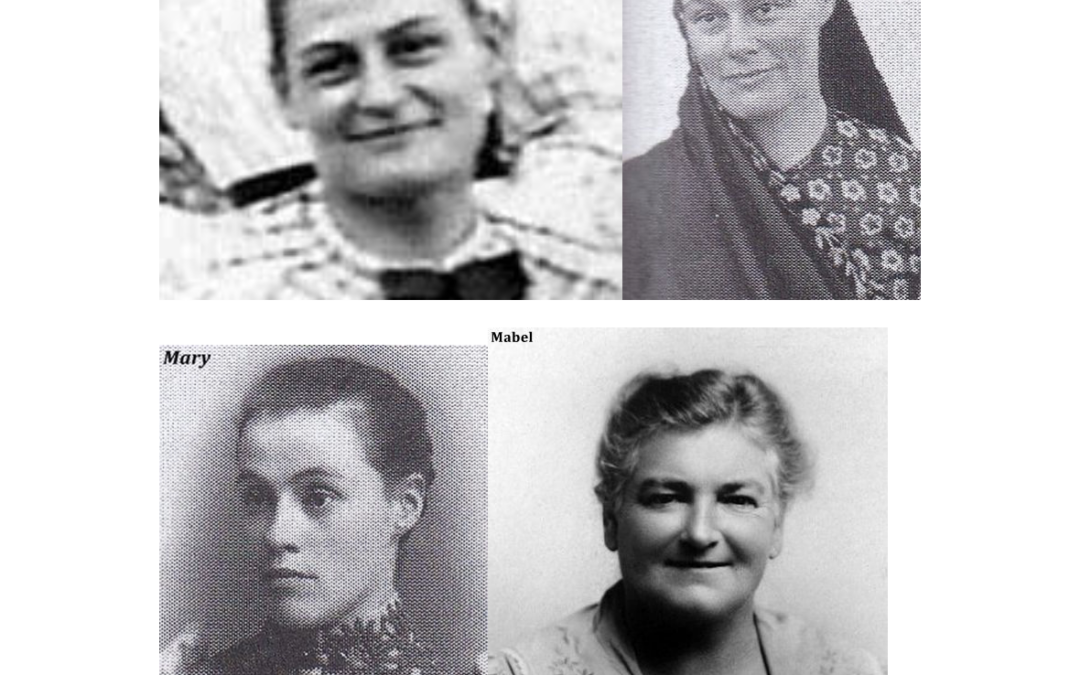
Mary, Louisa and Sibella Bazett, three intrepid sisters, arrived in Mombasa in 1892; they were followed by their cousin Hazel Bazett in 1899. The sisters had been brought up in a strict religious (Church of England) family of thirteen children and were determined to do missionary work in Africa. Henry Parker, the Bishop of Eastern Equatorial Africa had asked the Church Missionary Society to send women to Mombasa to teach African women at the CMS centre of freed slaves at Freretown, on the mainland opposite Mombasa island. The Bazett sisters answered the call. They may have been influenced by their cousin Jack Haggard (brother of Rider Haggard), British Consul at Lamu 1883-1885, and they were also inspired by the revivalist movement in England in the 1880s. Moreover, Louisa had been engaged to a young man accepted to work as a missionary in East Africa and she was to join him there. He died before he could assume the post, but Louisa wanted to honour his commitment. Her sisters did not wish her to travel alone and Mary and Louisa decided to accompany her.
Some letters from Mary to her mother survive. She describes their arrival in Mombasa: ‘The first impressions of Africa were to me sad. On Wednesday by 7 o’clock we were steaming into Mombasa harbour. It was a very pretty sight, sweet little Freretown nestled down amongst the beautiful foliage and Mombasa with its grim Fort close before us, also pretty in its way & very interesting looking; but as one’s eye followed the long long line of native houses stretching out from the town almost away to Dr. Edwards’ house at the corner of the island and knew that no one has yet touched more than a very few of these people to say nothing of all the educated Arabs & Hindus who abound there, the interest mixed with pain . What a field for work is there & oh how weak the workers…Thursday we were too busy to do much study & on Friday unpacking one box meant altering all & stowing away those things we should not want here. It was slower work because of the heat. One has to be continually washing and changing clothes to keep at all comfortable. So long as you sit & read only it is fairly well, but any exertion costs you something…We made a noble attempt to enjoy a mango but were baffled.’
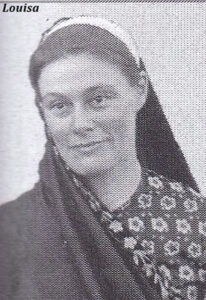
The sisters were employed with teaching and sewing clothes for the children. Mary started a boys’ school in Mombasa, later to be called the Buxton High School. But she succumbed to malaria, a constant hazard in this mosquito-ridden region, and had to be invalided back to England in June 1895.There she met Harry Leakey, a childhood sweetheart, now a young man destined to become a devoted missionary in the Kikuyu area. The pair were married in 1899. Harry left for East Africa in 1901, and Mary followed him in December of that year. She remained in Mombasa with their baby until March 1902, when she travelled to Kikuyu to set up home at Kabete Mission nine miles from the new, still shanty, town of Nairobi. Their first home comprised a mud and wattle hut and two tents; in 1906 they finally had a stone house. Over the years they built schools, a dispensary and a church, and translated the Bible into Kikuyu. Among their children was Louis, who was to become a renowned anthropologist. Mary, known as May, was frail but became a motherly figure to the Kikuyu, among whom she ministered until her death at Limuru in 1948. She is buried in the cemetery of All Saints’ Church at Limuru.
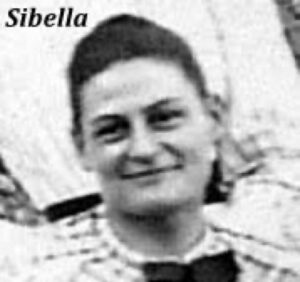
Louisa, who had inspired the sisters to go to East Africa, did not long remain single after her arrival in 1892. She was courted by, and married in 1893, John Robert Wilson Pigott, an official in the Imperial British East Africa Company which administered the region. She must have been a strong influence because his superiors claimed that he had identified himself too actively with the Protestant missionary movement at the coast and promoted him to another sphere. The pair departed for Palermo in 1896, where Pigott had been promoted consul. Louisa gave a collection of East African objects to the British Museum in 1940. She died in Loughton, Essex in 1949.
Sibella, known as Sibbie, worked as a missionary at Freretown until she married in 1902 George Reed Burns, a fellow missionary from the Church Missionary Society, an evangelical who hailed from Australia and had also been working at Freretown. After a bout of malaria Burns was posted to Nairobi and worked for many years there, mainly attached to St Stephen’s Church and, later, All Saints Cathedral. The pair had five children but only two survived. Margaret died of fever at 5 months, Barbara died of dysentery aged 2, and Margery died aged 8 of diabetes. George Burns died in 1944 and Sibbie ten years later. Both of them were buried in St Cuthbert’s Church cemetery in Limuru.
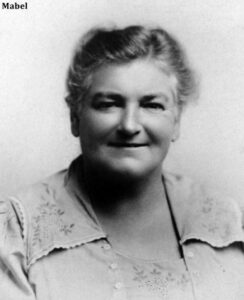
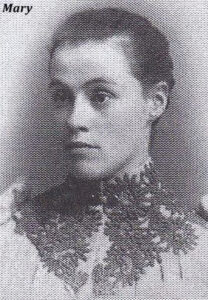
The sisters’ cousin, Mabel Gertrude Bazett, married a cousin of Harry Leakey, the Rev. Richard Herbert Leakey. Richard had set off for Uganda in 1892, as a Church Missionary Society missionary. He was the first resident missionary at Koki in 1895, but the Uganda mutiny of 1897 disturbed this enterprise and Leakey went to England on leave. There he met Mabel whom he married in 1899. The couple travelled to Uganda in that year and set themselves up at Ndejje Mission. They were to have three children. Mabel died in Exmouth in 1936, and her husband a year later.
Recent Comments